For My Mother

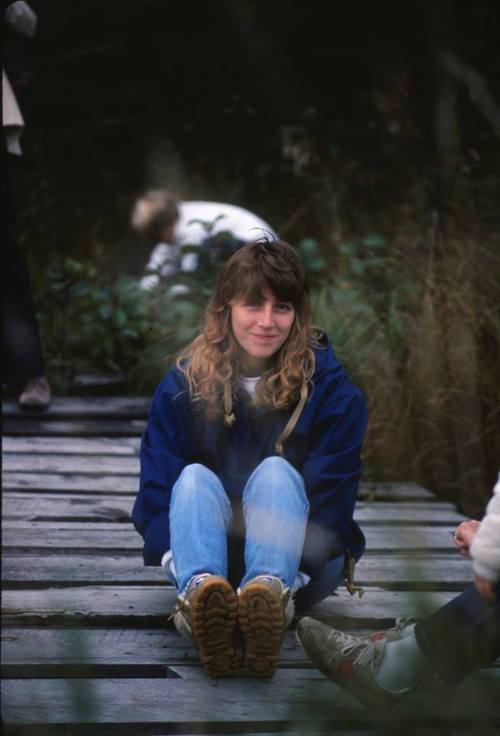
Today is my mother’s fifty-fourth birthday. For the past three years, I have been unable to celebrate with her, something that greatly saddens me. Though I am so fortunate to be in Scotland, and my mother would not have it any other way, I still wish I could be with her on her birthday to show her just how much she means to me.

Inspired by other writers, I have decided to write the life lessons my mother has taught me to show her just how much I value her wisdom and companionship. It is my hope that one day I can be half as selfless and good as she is, and I find her guidance more valuable than any material thing as I navigate this great unknown of “Twenty Something.” So, for future reference and in tribute to my favorite person, here are twenty lessons for living that have stuck with me throughout my privileged time with my mother.

1. Pay attention to the tiniest bug, ripples on a still lake, or a stray wildflower. Make up stories and personalities for them.

2. When reading aloud, always make sure each character has its own special voice.

3. If you aren’t going to snort, why even laugh?

4. Don’t be afraid to get a little sweaty and dirty, for the confidence that comes with physical strength is a thing of beauty.

5. Never seek vengeance for the hurt others have caused you. Instead, keep showing them kindness. Maybe then they will realize just how foolishly they have acted.

6. Never underestimate the value of a new pair of socks.

7. Spirituality lives in the things that make you happy, whether it be in the garden, out on a run, or being with family.

8. Always order dessert. It’s good for the soul.

9. If a writer can make you shiver with the raw power of their words, hunt down everything they’ve ever written and read voraciously.

10. Sometimes children have more wisdom than grownups do, so make sure you listen to what they have to say with interest and questions at the ready.

11. Be as wild as a hunyak (don’t ask me what it means…), even if that means chasing your dreams to the furthest reaches of the globe. Those that love you will always follow.

12. Fluff your clothes in the dryer after they’ve been hanging for maximum coziness.

13. Be prepared for the criticism that comes with being yourself. Most often those people are too scared to do what you do, so don’t let them bring you down.

14. It’s okay to let others show their appreciation for you. You would be surprised how good people can be if you let them in.

15. Invest in quality baking products like a well made wooden spoon and a Kitchen Aid.

16. Channel your passion into doing things completely and fully: love until you feel as though you will burst, demand the best version of yourself, and always follow through with whatever you start. Perhaps this passion will inspire others, so never hide it.

17. Marry your best friend. Intelligent conversation, a twisted sense of humor, and a passion for living are the foundations for everlasting love.

18. Cultivate a passion for nature. Our world is a beautiful place, so always make time to sit by the sea and soak it all in.

19. Simplify your life. If even the smallest thing can bring you overwhelming joy, your life will be fuller because of it.

20. March to the beat of your own drum. Forever and always.

image

Originally written 25 November 2014

Dorothy Charlton (1920-2014)

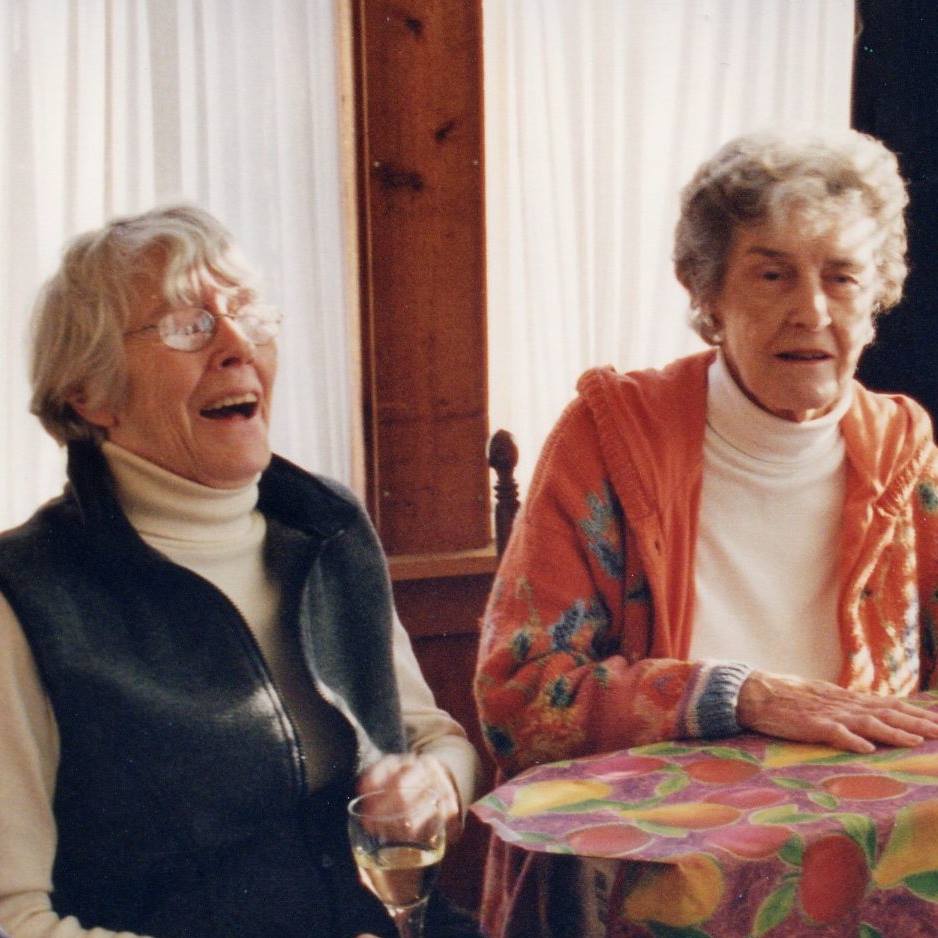
I often use this space to wax poetic about my grandmother, whose memory I use as inspiration for my adventures. However, in light of recent events I have come to realize the important influence of my family’s other matriarch. Dorothy Charlton, more affectionately known as Aunt Dot, was my grandmother’s older sister. Yesterday, after a sunny morning spent riding, I was informed that she had finally passed away.

I remember the year I left my home for Scotland as vividly as if it had just occurred. Perhaps one of my greatest memories is the cool May morning I spent with my Aunt Dot to tell her that I would be moving to Scotland in the fall. When I told most people about my plans for the fall, their faces would screw up in criticism, wondering why on earth I would commit to such a wild fantasy. In her old age Aunt Dot had become a consummate worrier, always trying to keep track of my aunts, uncles, cousins, and I as we grew and acquired families of our own. As I began to say the words, “I will be going to college in Scotland,” her reaction was something I did not expect. Her face lit up: our family had bred yet another adventurer. She then began to regale me with nearly ninety years of experiences, travels, and sights stored in the archive of her memory.

In my family, one could say that my Grandma Sue is the star of all the family lore. Yet as I sat listening to Aunt Dot on this day, I realized how full of a life she had also led. Though quieter and more demure than my grandmother, my Aunt Dot was a well-traveled and cultured woman. Road trips across the continental United States, floating in the Dead Sea, and the glamor of 1950’s Cuba constitute just some of her experiences. Aunt Dot had also spent time in my bonny Brittania, which explained her excitement at the thought of me moving there. Indeed, one of the motivations behind my travels to Newcastle in my first year was so that I could tell her I had been there, as Newcastle and its surrounding areas were where she had most often visited.

One of the things I find most special about Aunt Dot is just how much she had seen in her lifetime. Born in 1920, the scope of her firsthand experience is almost unfathomable. Aunt Dot had lived through the Great Depression, Civil Rights movements, and technological advances that are enough to make anyone’s head spin. Yet she was able to keep pace even into this year. On my last visit, I had pulled out my iPhone to show her a photo my brother and his fiancee. She quickly took it from my hand and mastered how to view more photos (by swiping right) in no time. Then she surprised me by saying, “These things have a good camera. I want one so I can take photos of you all.” At ninety four years old Aunt Dot wanted an iPhone. All I could do was stifle my laughter and say, “I’ll see what I can do.” While this does constitute a great “Aunt Dot Story,” looking back I realize just how, well, cool Aunt Dot was. She could never be classified as one of those elderly people disgruntled by technology, despite the fact that she had been born in an age whose ways are almost completely foreign to the modern generation. This is one of the things I have come to admire about my Aunt Dot: the ability to adapt to our changing world and to make the most out of present circumstances.

In many ways, Aunt Dot was the last piece to the beautiful mosaic that is our family’s past: of my mother and her siblings’ childhood, of times spent at Canada Creek with Grandma Sue, and when myself and all my cousins were just children ourselves. For Hannah, Rafe, Cole, Blaise, Jovie, and Sage, she became a link to this past so they too may share in our family history. She became the matriarch of our family, filling the hole and soothing the hurt that Grandma Sue’s loss caused. I do not think I am alone in saying that we are greatly indebted to her for this.

While I am deeply saddened at her loss, I take comfort knowing she is no longer suffering under the burden of old age. What pains me more, I think, is the fact that I cannot be with my family during this time. For my aunts and uncles, those who have known Aunt Dot the longest, my sorrow for what they must be feeling is indescribable.

However, the person’s grief who causes my heart to ache the most is my mother’s. In many ways Aunt Dot helped to raise my mother, always taking her on those adventures across the United States and instilling her with a deep love of Scrabble. Over the course of my life, I have taken it upon myself to be my mother’s “little warrior”: to be mighty and fierce when she cannot. I think this occurred the day my grandmother died. As she had spent most of her life taking care of others, I realized on that day that she finally needed someone to take care of her, and I have never stopped. While I am inexplicably grateful for this privilege to study in Scotland, it’s times like these that make a small part of me wish I had stayed at home. At the moment, all I want to do is wrap my small arms around my mother and tell her that it will be okay, that I am here and I will never go anywhere. But I can’t. This is what I think makes death so hard: not the actual death itself, but trying to piece yourself together afterwards. If you have nobody to help you, to tell you which pieces you missed, will you ever truly be whole? Tucked away in this wee corner of Fife, away from all those I love dearly and physically unable to help them, I am full of sorrow. However, I do believe that my family, full of so many strong individuals, will make it to happier days again.

In two days time it will be Thanksgiving. My heart breaks for my family even more, for they must deal with this loss at a time when people are expected to be jovial and light-hearted. Yet perhaps Thanksgiving will be just what they need to heal. For as long as I can remember, every Thanksgiving a small toast is given on behalf of my grandmother. Though Aunt Dot is now gone, a small part of me also hopes that somehow she has reunited with Grandma Sue, to regale her with tales of our accomplishments and to tell her about all these new faces and personalities she was sadly unable to know. Though these two incredible women, and their links to the past, are now gone, they are together, just as our family will be. And that, I believe, is something to give thanks for.

Originally written 25 November 2014

Meall a’Bhuachaille

In my days as a high school cross country runner I had earned the nickname “Bulldog,” the kind of creature every teenaged girl dreads being compared to. While it gave my teammates ample ammunition to tease me with, I learned to take it in stride, as it meant that my coach appreciated my ability to endure every challenge the sport had to offer with strength and ferocity. This bulldoggish personality means that I am also always looking for new and exciting running challenges to test whether toughness was what truly knit me together.

As it happens, moving to Scotland introduced to me a new caliber of running that I had previously never seen. While the kinds of Scots portrayed by the media may be just glorified stereotypes – fierce warriors who can be stuck by several arrows and still carry on as normal – my time in Scotland was beginning to demonstrate how much closer to reality these representations may be. For the truly intrepid on the Scottish running circuit, Scottish hill racing (known as “fell running”) is the chance to prove your make to your teammates and rivals. The idea is absurdly simple: run as fast as you can up a large, steep hill. For the more challenging fell races, the event is usually a combination of mountaineering and intense endurance racing, as both hands-and-knees scrambles up loose scree and marathon-caliber racing skills are required to finish. For my part, after a leisurely Sunday morning long run up Fife’s largest hill, West Lomond, I believed a fully-fledged fell race to be the most exciting prospect. And with the Meall a’Bhuachaille fell race in the Cairngorm National Park just a week away, it seemed that something in the universe was begging me to try it.

image

In the week leading up to the race, Scotland had been weathering winds up to seventy miles per hour in the after effects of a storm sweeping bombarding England. As race organizers were anticipating winds up to sixty miles per hour atop the peak of the hill, they rerouted the racecourse, which entailed adding distance, making the race closer to eleven miles rather than seven miles. As I had not really run more than seven miles lately, I was suddenly apprehensive. All of the other participants, seasoned fell runners, merely shrugged at the added distance. The cloud of “What have I gotten myself into” merely loomed over me as I feigned interest in pinning my number on.

It was fascinating to watch my fellow participants prepare for the run; what gear they were bringing on the course, how tightly they laced their worn trail shoes, and the various, and at times eccentric, warm-up rituals. I felt a bit out of place as perhaps one of the youngest participants and someone who had never done a fell race before. As this was a Category A fell race (ascent of at least fifty meters), I felt very naive in my choice of “first fell race.” And as I chirped merrily away with my teammates, I couldn’t help but feel self-conscious that maybe I didn’t belong here.

The first ascent began quite well for me. I tried running a majority of it and strategically chose the places I would walk in order to not fall behind the other participants. In hill racing, walking is acceptable if not crucial. There is an entire technique to it that my more seasoned teammate demonstrated prior to the start: hands on thighs, legs braced, and trudge. I managed to keep pace with one friend of mine for most of the ascent, that is, until we hit the wind. I think the strength of the wind is really what got to me throughout the race as a whole. As I’m not a very big person, each gust of wind nearly blew me from the side of the hill and even knocked me off my feet a few times. Other times I felt as though I was moving, until I realized that I was in fact being held back by these gale-force gusts. As I reached the top of the hill, marked by a cairn, I thought I was doing pretty well. Then came the descent.

When I was a child I used to be fearless: I could climb trees as nimbly as if I had been born amongst them and would run headlong down sand dunes without qualm. As I have gotten a bit older and realized the limits of the human body, however, that fearlessness has been replaced by over-caution. In the summer of 2013 I severely rolled my ankle on a trail run, which put me out of commission for months. I have never taken that amount of time off since I began running. Recovery involved physical therapy twice a week and absolute rest, easily one of the worst things I have experienced. I thought I would go mad. Never again do I want to experience an injury like that. Yet unfortunately, the nature of ankle rolls is just that: once you roll it, you can never go back to how you used to be, and it will always be weak and more susceptible to rolling. This has put a lot of fear into my physical activities than I would like: I’m constantly worried about my ankle, always taking my time to do things and gingerly completing whatever I am doing in order to protect it. Even with ankle supports, I am still haunted by the blue, swollen, deformed wreck my ankle had become. The fearlessness that once was so quintessentially Maggie has been replaced by caution and delicacy.

Descending Meall a’Bhuachaille was a reflection of this. I was picking my way gingerly down the scree, constantly worried my ankle would give at any second. At one point, I heard a sickening snap emanate from my right ankle, my bad ankle. Yet I was determined to keep going, since I was alone on the side of a mountain. All the other participants were either leagues ahead or behind me. Just the mountain and myself: I had to do this. I stumbled, I slipped, I tripped. The wind kept ripping at my eyes, making it harder for me to see where I was putting my feet. Yet for a split second I was able to take in my surroundings: a sunshine that seems almost endangered in the October season, majestic Scottish hills all around, and a loch in the distance. The Scottish highlands in this state are perfection. As I was alone with all these elements, I finally gained the small shred of confidence I needed to simply trust my body and hope for the best. So I began to run, faster and faster, down Meall a’Bhuachaille. For the first time in a long time, I felt free.

After this descent I made it back out onto the road, where I encountered a few other participants, the first people I had seen in about half an hour. I overtook them with ease, gaining confidence as the run progressed. I had no idea how far or how long I had been running, all I knew was that we were drawing closer to the campground where the race started. Little did I know that this was only halfway. Since the course had to be rerouted and distance added on, I was essentially running blind. I had no idea where the course was going next, and little did I know that this addition meant there would be a second ascent.

This is where my real struggle began. Again there was a “wee” hill on the road; to any from my hometown, this hill would seem mountain enough, similar to the “huge hills” we used to run at our Sault St Marie invitational in high school. To the other fell runners this was a flat road and the perfect time to rest for the upcoming ascent. They all ran up the road with ease. And while I pride myself in faring quite well on hilly runs, I needed to walk at a few points as I was slowly losing the ability to breathe. It was here that I encountered the teammate who suggested this race in the first place. Already ascended and descended the second peak, he was casually sprinting down this last hill towards the finish. This was when I realized I had quite a ways to go.

The second ascent began on root-bidden trails slick with muck. I also had to keep diving into the verge to make way for leaders hurling themselves down the trail. I recall watching them in awe as their feet rolled over the roots and stones with ease, as if they themselves were a part the old Scottish forests. As I made my way out of the trees at last I caught sight of the second peak: the entire ascent was a gaping maw of deep, black mud, hungry to suck me down. With each step I sunk nearly up to my knees, not only fighting to free my legs but struggling against even stronger wind. These factors, along with already being exhausted from the first climb, made the second ascent one of the hardest things I had ever done. Then one of the racers I had so eagerly galloped past on the flat road shouldered ahead of me, and I realized how much of a greenhorn I truly was.

Suddenly I saw the cairn right before me. At last! Yet where did that runner who had passed me only moments before disappear to? As I reached the cairn, I recognized it as a false marker. There was an additional peak we needed to ascend before we could turn around. The stronger, older, and more experienced runners I had put so much distance on suddenly moved around me, as if the howling winds had no effect on them. The final push to the turn around point also took me by surprise: it was an all out, hands-and-knees scramble up loose slate stones. With the hood of my vest trying to break free from my neck and the wind fighting me, this was the moment I was almost certain I would be blown straight from the mountain face. Yet I stood up and I pushed on.

I was alone once more. Really alone. I was convinced I was the last participant out on the course, which nearly brought tears to my eyes. As a two time high school cross country MVP with race wins to my name, last is a position I thought I would never encounter in my lifetime. Yet here I was, alone in the gathering dark and speckling rain. This was probably one of the most humbling experiences of my life, yet it forced me to confront precisely why it is I run. I signed up for this race for myself, to test the limits of my body and to experience something new. I am always seeking new experiences and crave adventure, and this, mountain running, is the very heart of that. For the second time that day I mustered my courage and flung myself headlong down the hillside into the gathering dark.

After falling onto my backside twice, a shoe being claimed by the muck, fingers bloodied on the twisting bracken I reached the road. I could not feel my legs at this point, yet the sun had returned to welcome me back to the finish line. Faster and faster I ran, determined to put in a good effort for the completion of my fell race. I do not know what my finishing time actually was, I ended up not being the last one in but third to last, and I finished. I ran an eleven mile race that ascended two giant hills. I survived.

Meall a’Bhuachaille now constitutes the hardest physical challenge I have experienced to date. I still cannot believe I actually willingly participated in a fell race, and a rather difficult one at that. This race also reminded me of something very important: that I run for myself, because it is my passion, and how it is a gateway into the beautiful places of the world, such as the Scottish highlands. As a very competitive person, winning titles and being ahead of all my teammates used to be the only thing that mattered to me as a runner. While I achieved none of those things at Meall a’Bhuachaille, I realized how little those things constitute the sheer joy of running.

While I tend to be a very predictable person who is quite set in my ways, since moving to Scotland it has become my mission to infuse my life with as much spontaneity as possible. Though I love the comfort of routine, every so often I feel the insatiable urge to do something that is completely out of character, to test my body, mind, and will, and to see just how far I can go. Meall a’Bhuachaille constitutes one of these great spontaneous milestones that punctuate my life. I managed to complete something most people would never even dream of doing, and I surprised myself by being up to the physical challenge. Lately I have been telling myself that I will never be in as good of shape as I was in high school, that I’ve lost the mental edge I used to have as an athlete. Yet my participation in this race reminded me that I am indeed a strong person, both physically and mentally.

Following the race my legs were bruised and scraped from my fight with the highland bracken. I was not able to walk properly until the week after, and every time I stood up my bones protested. I was also forced to throw away the shoes that endured the wrath of the rain and mud, as “survived” was a rather loose way of describing their post-race state. The question remains: would I ever do something like this again? A better question might be “when is the next one?”

Originally written 26 October 2014

Another Beginning

“If you want to overcome the whole world, overcome yourself.”

-Fyodor Dostoevsky, Demons

It was the third time my mother left me tucked away amongst the sea gnawed rocks and Scottish heather. As I awaited the loneliness to slither down my throat like a sour, medicinal draft, it was perhaps out of force of habit that I fled into the night, away from yet another new roof under which I must carve out my existence, away from yet another person whom I did not wish to see me cry.

Under the dripping light of the Corn Moon I sat, preparing to be my own shoulder to cry on yet again. However, the longer I sat, transfixed by the darkling sea, the emptier my mind became. The only thought my mind could grasp was not really a thought at all, but rather the felling that envelops the spirit as the body is physically embraced. I sat cradled in the arms of Fortune, for all I could say to myself in this moment was, “Gosh, am I lucky.”

Though trivial this may outwardly seem this moment signifies a personal victory. I had rushed out into the night seeking the darkness to hide my tears, lamenting yet again the absence of that world I love so. But the tears never came. I realized as I gazed back at the sleepy St Andrews that my heart had been swelled by all that this place is, that I am capable of making a home here as well. As a person who values a home above all else, I feel this may be the great leap into a more fulfilled life that I needed.

St Andrews has finally become my home too, though it lacks many of the qualities I convinced myself a home must possess. I am three thousand miles away from my family, the building in which I dwell is not a permanent situation, and I am without a Bear. Yet I can stare out at the North Sea and wonder what awaits just beyond the horizon line. I can run through forests I once only read about. I can simply be free. These are the components that truly build a home, for they are foundations that fortify the soul; and for the time being, St Andrews is where my soul belongs.

The mention of freedom brings to mind another though. For the first time in what seems a very long time, I feel free to simply be. The girl who began university nearly three years ago was a slave to organization: she believed life could be compartmentalized into her definitions of what home, success, and happiness entail. Yet she had not lived enough to realize that when you stop attempting to mold something as transmutable as Life into what you think it should be, it begins to take on its own form that is more beautiful and pure than what you could have ever conceived.

Three years ago I had a definite plan for my life, down to its minutiae, to last me until retirement. Now my plan doesn’t extend beyond the day’s tasks. I have no plan for myself beyond the immediate future, for I want everything and nothing for my long term. I want to sit on my couch and think all day, I want to compete in the Mongol Derby, I want to write a novel, I want to rub elbows with my favorite actors at Cannes as I discuss a movie I helped produce, I want to chop lumber for a living: all of these things are too absurd, too unrealistic, and too various for me to hone in on one and hunt it down. Thus I have no obligation to any of  them, and that to me, who wasted so many years on planning the unpredictability of youth, is refreshing. I can focus on today, this hour, this one heartbeat: and I am happy.

All of these reflections culminate into a grand conclusion. Yet how can I conclude when I have not even had my first class yet? The conclusion is this: I have overcome myself. Though I pretend I am wiser than my seventeen year old self, I am taking a line from her chapter to begin my penultimate year here at St Andrews, the very line that began this whole journey in the first place. I am overcoming who I thought I was: a person who depended on her home for stability, a person who needed a plan to be satisfied, and a person who only played at strength but never bothered with any heavy lifting. For the first time, I finally feel ready and eager to overcome all of the challenges of university, for I have overcome the narrow definition I reserved for myself.

This semester I am taking classes, such as Literary Theory, which I have no idea what it entails or whether I will be successful at it. I am living with someone who is in many ways my direct opposite. I have and will be gregarious when it comes to meeting new people, whether they are potential academic children (I’ve got one so far!), potential new friends, or that elusive “Person.” I have rediscovered why I came to this university in the first place: to run so far from my comfort zone that I cannot see it from this new horizon.

I have also rediscovered what truly makes me happy in life, and it isn’t the safety of my home nor the comfort of routine. Challenges are what I live for, to test the limit of what my body, mind, and soul can do. So maybe I can overcome the whole world after all.

Originally written 14 September 2014

Schwangau

“Faërie contains many things besides elves and fays, and besides dwarfs, witches, trolls, giants, or dragons; it holds the seas, the sun, the moon, the sky; and the earth, and all things that are in it: tree and bird, water and stone, wine and bread, and ourselves, mortal men, when we are enchanted.”

-J.R.R. Tolkien, On Fairy-Stories

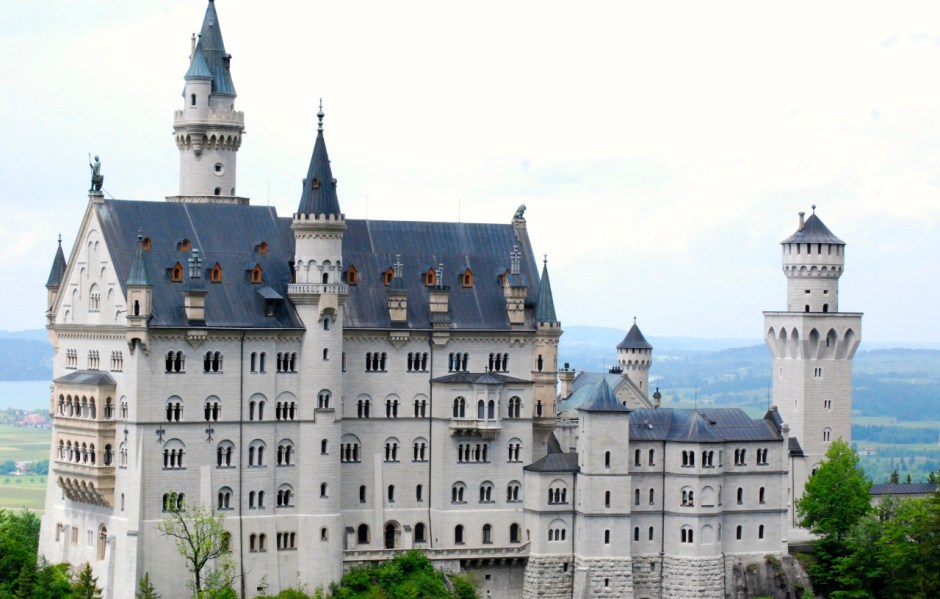
If you had the chance to live out one of your most beloved fairy tales, no matter how small the way, would you? The chance to fulfill a childhood fantasy, inspired by such tales, can overwhelm even the most logical “grown up” heart, driving it to take action. As for me, I do not think I will ever grow out of my love for fairy tales and fantasy. Any opportunity for me to daydream, to play, and to explore this magical world I will seize with zeal. The chance to see Germany’s famed “fairy tale” castle, Neuschwanstein is no exception. Though I was warned against it due to its overly tourist-y atmosphere, I could not be deterred. Once the chance to physically place myself into one of these scenes of magic and mystery presents itself, I will pursue it at any cost.

I am still comprehending the fact that I actually visited Neuschwanstein Castle, a place that had held a top tier on my bucket list for so long. The castle lived up to almost every expectation I held of it: each room had a different theme, many inspired by Wagner operas (which were favorites of King Ludwig II), adding to the sense of grandeur and majesty. The castle boasted a grotto with a waterfall and “rainbow machine,” which almost looked like something constructed for Disney World. However, that air of kitschy that often pervades Disney World was absent, since Neuschwanstein was constructed for personal, rather than public, pleasure. This castle was someone’s vision to reclaim the magic and mystery of the old world, to live without ever having to disenchant themselves.

While my traveling companion was not as impressed as I was, I believe this was due to the fact that he could not detach himself from the cynical, political view that taints the castle’s reputation. I find this rather disheartening, that so many people are quick to condemn anyone who simply loves fairy tales. Yes, perhaps Ludwig II did take it to the extreme by building a fairy tale castle with a grotto, a hall of singers, and a bed carved to look like a Gothic cathedral, but if any one who loved fairy tales and stories had the means, they probably would too. All I can say is this: what is wrong with wanting to live in a way that fully immerses you in the magic that so many have forgotten?

Though the tour of the castle was short, this is due to the fact that King Ludwig II died before it could be finished. Without the visionary behind it, construction of the castle soon ceased. However, I find it very fortunate that the castle was converted into a place for the public to visit and admire, since it does possess an air of magic. I found myself holding my breath at every new turn within the castle, as if anticipating some sprite or prince to step out from their hiding places to lead the tour themselves.

We concluded our adventure with a long hike around the Alpsee. This is perhaps one of the most beautiful places I have ever been. As you can see from the photos above, the water was like glass, only adding to the mystical nature of the entire area. The walking trails were beautiful and tranquil, with our only contact being those odd stone figures pictured above. The hike itself has inspired me to further explore the Alps, as I have never truly been amongst mountains, so I can only hope that I will be able to visit similar beautiful countryside in the near future.

All in all, being able to see Neuschwanstein Castle with my own eyes was an amazing and soul-satisfying experience. I get all giddy when I think of how many bucket list locales I am ticking off my list, as if I am doing that little girl who read too many fairy tales proud. This place was the perfect way to conclude my trip to Germany and my first voyage to continental Europe. After a grueling semester, it was wonderful to get the chance to restore myself in a place I felt so at home in. As this puts the cap on the “half way point” in my career at St Andrews, I can only hope these final two years provide even more opportunities to explore, to play, and to revel in the magic of our world a little more.

Originally written 7 July 2014

Dachau

For our “Gentlemen’s Tour Abroad,” Justin and I decided to spend two of our five days on day trips outside of Munich. As this trip was important to both of us, we decided it was only fair that each of us got to choose where we really dreamed of going for the day trips. So, as per Justin’s request, our first trip was to Dachau to see the concentration camp. Though I initially had qualms, when I look back I am actually glad I went, as it was an opportunity to really learn about the terrible things that occurred in these camps. I realize now that the education on certain things, especially the great tragedies of human history, that we receive in school is actually very censored, as many of the things I learned from the Dachau memorial were not covered in school. Perhaps this is another example of why travel, especially for young people, is so important: if you force yourself out of your comfort zone and see such places of tragedy with your own eyes, you can get a better sense of the history than if you were to simply read your (heavily edited) history text book. Furthermore, many of these places have carefully curated museums, constructed by experts and witnesses alike, to truly ignite the flame of knowledge in its visitors.

The main maintenance building of the camp has now been converted into a thirteen exhibit museum, complete with educational movie theater, for the public to tour. What I found particularly interesting were the hundreds of accounts by Dachau survivors quoted on all the exhibits, some excerpts taken from journals written as the events were unfolding. Seeing the faces of survivors and victims on the exhibits was really quite sobering, and really helped to solidify my historical understanding of what occurred.

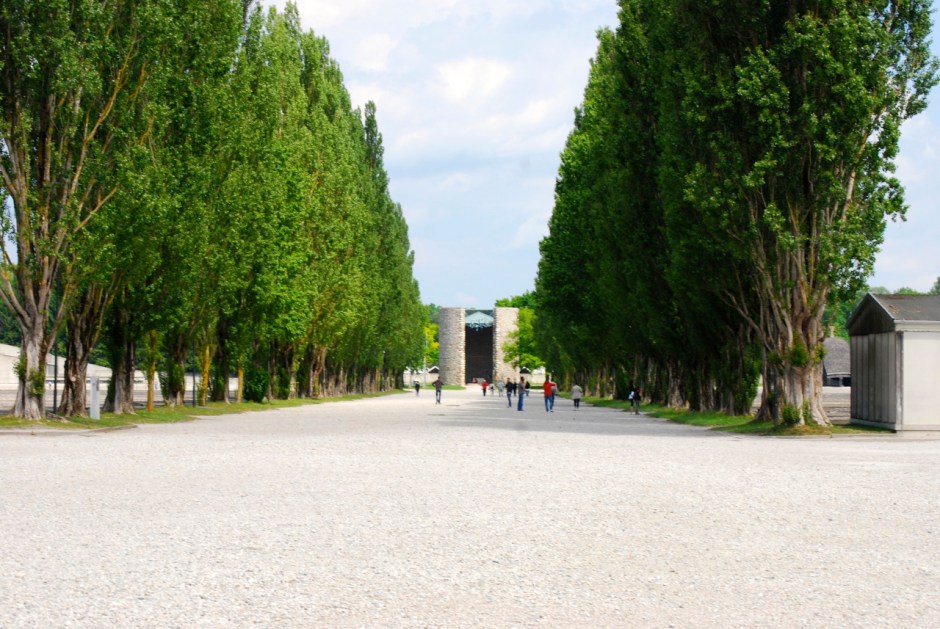
While two of the bunkers, where prisoners were kept, remain standing to give the public an idea of what occurred at Dachau in terms of living conditions, most of the camp itself is now a grand memorial. Religious memorials for Russian Orthodoxy, the Protestantism (the Church of Reconciliation), Catholicism (Mortal Agony of Christ Chapel and the Carmelite Convent), and Judaism surround the camp. Other memorials, such as the International Monument outside the maintenance building and the “Unknown Prisoner” by the crematorium add to the air of remembrance and respect for those who endured life at the camp.

Perhaps what I found most interesting, albeit unsettling, about Dachau was that the surrounding area was actually quite beautiful. The paths of remembrance by the crematorium, where several monuments to the victims stand, were tranquil and lushly forested. I found it rather disturbing that such horrible things occurred among the beautiful trees and flowers. Perhaps this is a lesson that despite a beautiful exterior, rotten things may be unfolding at the core.

The Dachau Concentration Camp memorial was an incredibly moving and educational experience. While at first I was hesitant, I am thankful I had the opportunity to visit such an important historical memorial in the modern world.

Originally written 7 July 2014

Munich

“Dear sensibility! Source inexhausted of all that’s precious in our joys, or costly in our sorrows! Eternal fountain of our feelings! ‘tis here I trace thee and this is thy divinity which stirs within me…All comes from thee, great-great SENSORIUM of the world!”

-Laurence Sterne, A Sentimental Journey

After reading the quintessential “Grand Tour” novel in Comparative Literature this semester, I was inspired to finally make my first voyage to the European continent. This was also made possible by the arrival of one of my oldest friends from home; since he was studying abroad in London for the month of May, he decided to end his first trip abroad by visiting me in Scotland then accompanying me to Germany.

So between May 31st and June 4th we walked, read, and ate through nearly everything Munich had to offer. As this was my first trip to Europe, I was beyond excited to finally see some of the places I only thought were to be read about in books like A Sentimental Journey and other travel narratives.

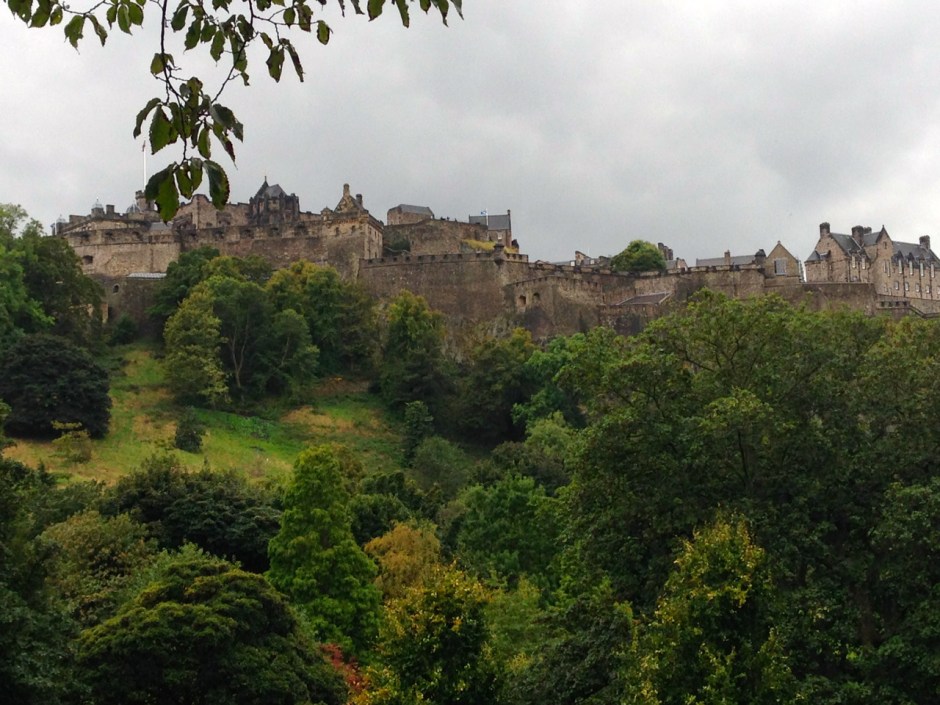
Munich is unlike any other place I have experienced before. I have never really been to such an incredibly busy city in my life, especially one so open to tourists as Munich. I probably saw more people walking down Marienplatz than I have all semester in that blustery Scottish village. To say I was overwhelmed at first was a bit of an understatement. Not only the number of people, but the grandeur of each building as well contributed to this feeling. In Scotland, most of the architecture is pretty humble: stone cottages nestled in the mountains, whitewash flats half tumbling into the sea. Even the castles and churches in Scotland, believed to be the grandest examples of Scottish history and culture, seem drab and morose compared to the Munich Residenz, the former royal palace of the kings of Bavaria.

Also speaking of architecture, I could detect a heavy Greco-Roman influence in a lot of the sculptures and accents around the city. Statues of what one could only assume are Pan, the god of nature, suddenly appear out of the thicket when walking a wee forest path, a goddess stands tall over the Oktoberfest fairgrounds, and the Hall of Fame consists of what appears to be Roman busts though the faces are of Bavarian monarchs. While Scotland is full of history, such history is often in ruins due to religious conflict or weather damage; here in Munich, the history is perfectly preserved, and has the air of being much older due to this Greco-Roman influence. The architecture and decoration of many of these buildings give a sense of a different kind of history entirely, one of an art-conscious society at the peak of its opulence. I have never seen anything like this before and I was in complete awe.

On our first full day in Munich, we toured the Deutsches Museum of Science and Technology. This museum is similar to the American Smithsonian in that one cannot properly visit every exhibit in just a day. While the arts student in me found some of these scientific and technological exhibits a wee bit boring, I did find joy touring the nautical exhibit in the museum. The museum boasted the complete history of maritime technology, starting with Southeast Asian dugout canoes all the way to modern pleasure, industry, and research vessels. As I was deep in Moby Dick at the time, I found the information on the whaling industry of particular interest. The other exhibits I found fascinating: the replica of Altamira Cave (a Spanish cave with some of the most perfectly preserved Stone Age paintings in the world), the music exhibit (who knew pocket fiddles were a thing?!), and astronomy.

The next two days were spent on day trips to Dachau and Neuschwanstein Castle, but those will be detailed in separate posts.

On our last full day in Munich we toured the Munich Residenz, the royal palace of Bavarian monarchs. As you are all aware by now, I have a keen fondness for castles which Scotland has been more than able to satisfy. However, Scotland does not have any royal palaces quite like this one. The very first room you enter is the Antiquarium, a great hall for the antiques collection of Duke Albert V. This hall reminds me of something that would be in Rome as a gathering place for politicians: Roman-esque busts of emperors line the hall, Latin inscriptions dance across the ceiling, and the marble flooring alone is enough to inspire awe. At this point I thought the rest of the palace would be small chambers with perhaps one or two tapestries in each. How could I know any different, as my experience thus far had been humble Scottish castles? Oh how wrong I was. Simply the wallpaper of each room was enough to study for an hour at least, so hopefully this gives you an idea of how sumptuous every chamber was. In one part of the palace every room had grand ceiling tiles painted in different themes, such as the star signs or the Greek deities of nature. However, in many of these rooms the main panels were missing or destroyed due to bombings in Munich in the 1940’s. Another interesting aspect of the Munich Residenz was the collection of antique Chinese porcelain, said to be the first imports of such into Europe. This collection was incredible, and it never occurred to me that I may see such faraway and exotic treasures in Munich, Germany. Also, as I had never seen real antique Chinese porcelain so close before, I think I worried the overseers as I practically had my nose pressed against the cases.

Besides all of these typical tourist sights, Munich is a bustling city that always has something going on. On the way to Gärtnerplatz we stumbled across the Viktualienmarkt, an open air market of food, beer, flowers, and other wee trinkets. I was so excited to finally experience my first European open air market, where all the food was incredibly fresh and the people as jovial as can be. In our evening wanderings we also stumbled across the Street Life festival that spanned all the way down Leopoldstraße. Though this festival was for the weekend we were in Munich only, it was amazing to see something a little less tourist-y and more on the local radar.

All in all, Munich was an incredible place. Though I am not really one for cities, Munich had so much to offer that, once I got the hang of it, I actually became quite comfortable. Perhaps one of my favorite places in Munich was the Englischer Garten, a public park that spans 1.4 square miles from the center of town to its northeastern limits. A lazy river wound its way through the park where we stopped to relax, a Greco-Roman style pavilion stood grandly above the park, and people of all ages came to relax. Since we visited the park mostly as an after-dinner walk, I found myself most at peace bathed in the bleeding Munich sunsets.

Originally written 7 July 2014

Oh Susanna

I have been meaning to make a post about this all day yet I could not seem to find the words until the moon stretched her luminous arms to embrace the sky. Despite the fact that I am an early riser, I am often wide awake until these quiet, intimate hours as my mind never seems to let me alone. So as I am at my most effusive, I may have finally found the right words to use.

The seventh of May is my grandmother’s birthday. As many may know, she is no longer here to celebrate, and has not been for quite some time. My grandmother passed when I was relatively young. So, while I had some time to know her kindness and recognize her passion for living, I am without the experience of sharing my adult life with her, unlike most of my relatives. These are perhaps the times in which I so ardently wish to believe in an afterlife. I wish that somehow she is participating in the experiences I am having as a young adult, particularly since she is the inspiration behind so many of them.

According to family lore, my grandmother was a no-nonsense kind of woman: she said what she meant, did what she pleased, and never spared a care to what others thought of her. These qualities are precisely what I list whenever I am asked who I want to be when I “grow up.” Such is reflected in the New Year’s Resolution that I made for 2014: to stop being so darn timid and just carpe diem. So while it wounds my heart that I cannot share these wonderful adventures and experiences with her, a wee twinkling of optimism reminds me that it is precisely her memory that inspires me to do the things that I do. My greatest dream in life is to simply live as fully and completely as possible, and I wholeheartedly believe this was instilled in me by my grandmother’s example.

Yet I do have to remind myself that I have made some great leaps in this direction already:

  • I have survived living away from home for two years; being the world’s biggest homebody, I take this as a supreme accomplishment.
  • Yet there are two additional layers to this independence: one being the rigors of university life, and this on top of navigating a foreign country. This is something I never would have imagined for myself five years ago.
  • I recently climbed a mountain.
  • I am able to fully engage in the things that give me joy: running, swimming, horseback riding, and aimlessly roving about like the semi-feral creature I am.
  • My entire university course load is reading and writing. Living the dream right there!
  • In a few short weeks I will be making my first voyage to the European continent.

As this semester draws to a close, and with thoughts spared to my grandmother on her birthday, I cannot help but think how far I’ve come from that timid small-town girl who wandered too far from her cozy little Hobbit hole. Even at the start of second year I was still unsure as to whether I belonged at St. Andrews, and whether I could truly commit to three more years so far from the comforts of my home and my family. Yet while wandering the Lade Braes today in the warm evening sunshine, amongst the fragrant bluebells and gurgling little streams, I realized I could not be anywhere else at this time. Thoughts of my grandmother only reinforced this affirmation: what was once a fantasy of mine has become very much a reality simply by the strength of my will to do something different and to be my own person. And I have only my grandmother to thank for inspiring me to do this, because without her example, I probably would be a very different Maggie.

Also, as we begin making steps towards our final years here at St. Andrews, many of my peers are beginning to think of life after university. Throughout high school I had had my life planned to perfection: where I would go to university, what my senior thesis would be, where I would go after, what career I would have, etc. Seeing as step one on that agenda was attend New York University (oh how I laugh at sixteen-year-old Maggie), it is safe to say that that entire agenda may be wiped from the board. Even at the beginning of first year I had seemingly not learned, as I meticulously began to plan my life once again. Lately, though, I have given myself a slap in the face for such behavior. I need to take a breath, think for a minute, and cool the jets. Again, if my grandmother has taught me anything, it’s to simply live and live for today.

So that’s what I intend to do. Right now, I do not have a post-university plan, and that terrifies the list-making, organization crazed, and security obsessed part of me. Yet it is also strangely liberating. I still have some navigating to do in terms of growing up, and trying to compartmentalize myself when I haven’t even straightened out my own edges is not in good practice. I think for now my only plan is to do “stuff and things,” and right now, I think that is a-okay. For so long I have been making plans, drafting lists, and organizing, yet these all seem fruitless tasks, since life is too fluid to be managed in any of these ways. Lately, life to me has been like my beloved North Sea: you cannot force it to do anything you intend for it, but if you simply step back and appreciate both the tempestuous and the still moments, it is beautiful all the same.

To come full circle, I am still deeply saddened that I cannot spend these wonderful years with someone so important to me and someone who would truly appreciate this ever-growing passion for adventure. However, I guess the only thing I can do about it is live a life of gratitude. I am thankful that I have such a wonderful role model who inspires me to live as passionately and insatiably as I can. While I am unsure as to whether she ever came across any Tolkien in her time, I am certain that these words would have fueled her spirit in the same way as mine; and so, “The road goes ever on and on…”

Originally written 7 May 2014

Ben Nevis

As I sit gazing into my back garden reflecting on this past weekend, part of me wishes I had never left the Highlands. There is a certain magic in the wildness of the Scottish Highlands that I will not easily be able to forget. While it may be my impressionable imagination and fondness for folklore talking, I can’t help but think of the ancient peoples and beasts that were as part of these lands as the pine glens or enigmatic lochs. I still like to think that those creatures and heroes of lore still exist somehow, merely hidden behind a craggy cairn or peeking out from a tree hollow. Having the chance to visit these places teeming with magic is something very special to me, as it reawakens my imagination and reinvigorates my soul.

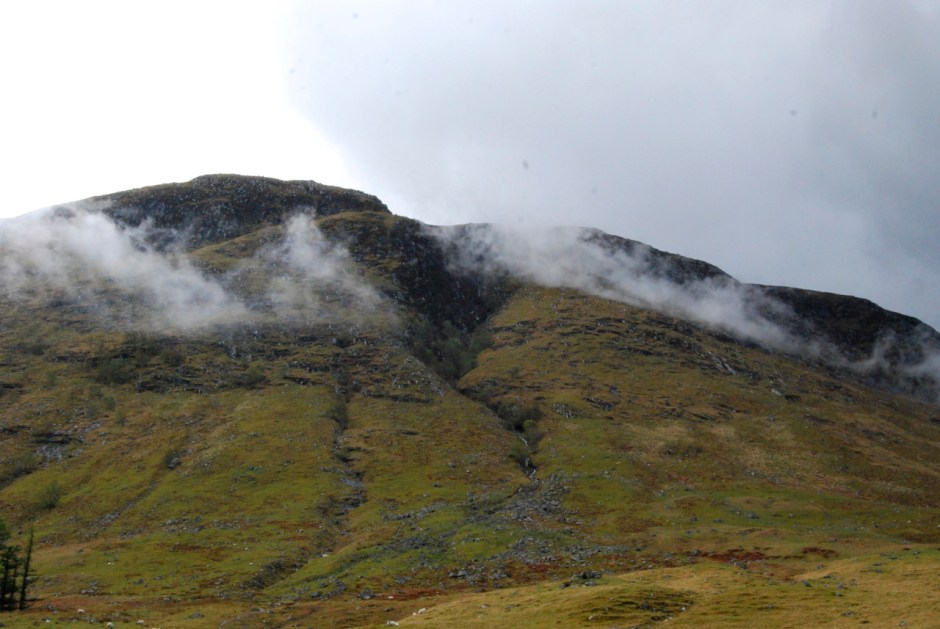
Spending the weekend in a place such as Ben Nevis with some wonderful company has definitely done just that after a very strenuous semester. I do not think I have ever worked as hard as I have this semester, really pushing myself to excel to prove my worthiness for the honors modules in the latter half of my university career. Combined with the inevitable end of the semester homesickness, I have been struggling a bit as of late. Yet I was able to let some of this go over the weekend, reminding myself exactly what I love about being abroad: the adventure. Ben Nevis is the highest mountain in the British Isles and in just over four hours we hiked to the summit, something I have never done before. While there were points I did not think I could keep going, the warrior poet (as my mother likes to call me) within drove me ever onwards, tackling each new obstacle with vigor. Climbing to the top has thus far been one of the hardest things physically I have ever done.

What really struck me on our venture was the absolute silence. After an entire semester of the hustle and bustle of Logie’s Lane, it was nice to escape the human condition of business to simply be. Again, not helping my overwhelming desire to pack up everything and abandon civilization for a solitary cabin. Time, as well as noise, was simply not a factor as we climbed. It did not matter how long it took, nor did I really care; we could simply move along at our leisure, enjoying uncharacteristic sunshine, wind in our faces, and the company of kindred spirits. Like a puppy that needs an hour or so outside to wind down, this hike was just what I needed to quell my Walden urges to settle back into a few more weeks of hard work during revision and exams.

Another aspect of this climb worth mentioning is the conquering of fear. While I love bounding up mountains and hills, exulting in the liberation of it all, descending is a whole different scenario. As a child I had no qualms about jumping from tall trees or play structures and I willingly hung over railings of lighthouses to see the insignificant world below. Somehow in my age I have lost this fearlessness, much to my disappointment. Picking our way down Ben Nevis was one of the most terrifying experiences of my life. Perhaps it was the fear of falling or the sheer plummet that turned my stomach, but suddenly I found myself alone, clinging to the side of a mountain suppressing the urge to cry. Or perhaps I was more upset at my complete and utter reserve, the loss of adventurous bravado I often attribute to myself. Me, the stouthearted and intrepid explorer, was afraid of a little danger. I wanted one of the boys in our group to come rescue me. I wanted to stay sitting on the side of the sheer rock face forever.

Yet it dawned on me that this is one more foe I had to vanquish alone. If I could routinely travel 3,000 miles from home on my own, I could certainly traverse down a mountain. While the going was slow, and the looming crevasse to my right turned my stomach, I made it down to the rest of my group. Though I was embarrassed at my palpable panic, I allowed myself to be proud of what I had accomplished. Somehow in the course of my twenty years I have become afraid. Afraid of other people’s cruelty, afraid of a world without the security of my parents, and afraid of whether I would accomplish all that I dreamed of or not. This realization of mine saddens me: how did I become so timid? As a child I was known for my fearlessness and fierce independence, keen to prove myself invincible under any circumstance, yet twenty years later I was trembling in the face of a small obstacle. Who was it that had made me think I was so small, so helpless? Moving to Scotland two years ago was one step in reclaiming this stoutheartedness, and as I reunited with my group after the initial descent, I felt as though I had regained another part. I had done yet another frightening task unaided, swallowing my trepidation and relying on myself to get the job done. While none of my companions knew it, bounding excitedly off in all directions after the lengthy delay, I had made another small step towards becoming the fearless and independent young woman I so want to be.

The rest of the weekend was filled with wonderful memories and even more wonderful company. A nice meal shared at the Lochy Inn, telephone pictionary, and a morning run in a logging forest all did wonders for the thirteen of us. On our drive back we also had the chance to ride through Glencoe. If I were to ask any of my American friends how they pictured Scotland to be, more often than not images of Glencoe would flash through their minds. This area has also been on my “Scottish Bucket List” for many a year due to its stark and majestic beauty.

All in all, this was probably one of the most amazing weekends of my life. I have already waxed poetic on here about how much I love the cross country team, but the feeling is genuine. I have found that in my time at St Andrews I have acquired two groups of friends: the cross country team and my main group. The latter can often be found at my house at any hour of the day, and while I am fond of them, I do see them constantly, whereas sightings of my cross country friends are really limited to training and long runs, where conversation is often reduced due to trying to conserve breath. Even our Saturday races seem too short, as everyone is keen to get home after a long day of racing. So I really treasure these long weekends where we can truly bond. Also, getting to do so in such a beautiful location did wonders for my semester worn soul.

Originally written 29 April 2014

Loch Ness

“Then something Tookish woke up inside him, and he wished to go and see the great mountains, and hear the pine-trees and the waterfalls, and explore the caves, and wear a sword instead of a walking-stick.”

-J.R.R. Tolkien, The Hobbit

I find myself indebted to J.R.R. Tolkien for creating the hobbit species, for in doing so he provided a very clear definition for a particular type of person: those who love their home, the simple life, yet every so often find themselves on very big adventures. As this blog is certainly evidence of, I see very much of myself in Bilbo Baggins, always running off into the blue to stare at old trees and climb mountains. Luckily for me, I am fortunate enough to have a father who is, without a doubt, exactly the same. For spring break this year my dad has once again travelled from home to spend a week with me and I could not be more thrilled.

This year, as he has more time to spend, we decided to pack up and spend three days in the Highlands. Though many would argue that it is a “touristy” location, we set our sights on Loch Ness since it is unquestionably too beautiful to ignore. Plus, my father the avid photographer was so sure he would capture the definitive photo of Nessie. While we did not see that majestic beast of lore, we did see three rainbows, so I still count that as a fortuitous occasion!

The whole train ride up I had “Over the Misty Mountains Cold” score from the first Hobbit film stuck in my head, the one that triumphantly plays as Bilbo ventures further into the wild lands beyond the Shire. Such describes exactly how I felt: leaving the safe shores of St Andrews behind for the wilderness ahead. While Loch Ness and Drumnadrochit aren’t exactly rough territory, it still counts as an adventure beyond the everyday hustle and bustle of St Andrews life.

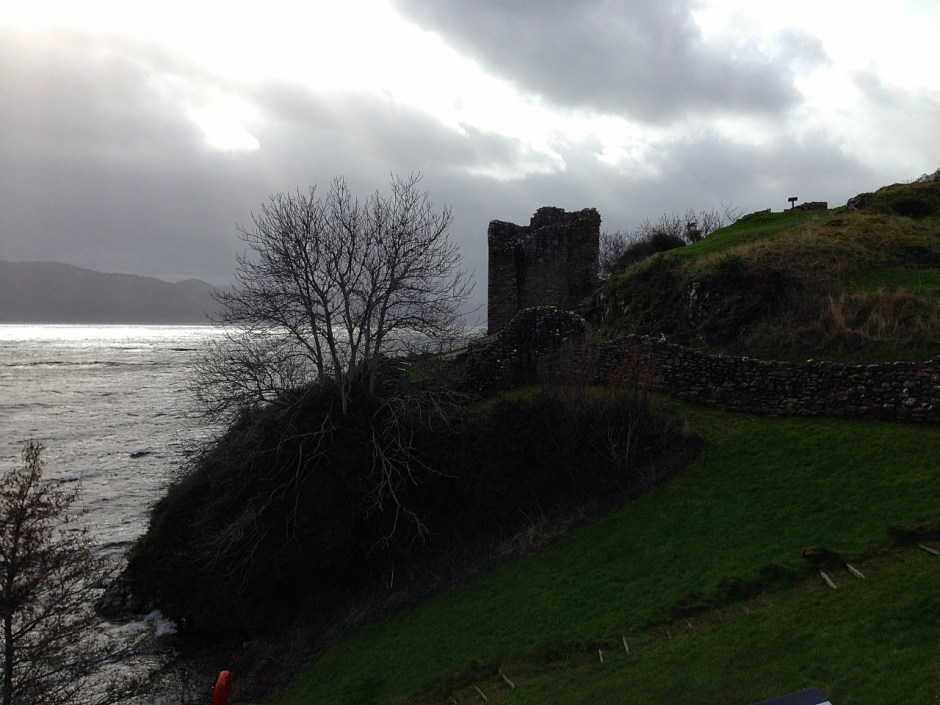
So the first day was spent traveling to our location. Yet on the next day we headed out to Urquhart Castle, right on the shores of Loch Ness, to begin our adventure. Though the castle is in ruins, it is still an impressive sight. It really makes you appreciate the skill, courage, and hardiness of medieval peoples; they built such a stronghold right on the edge of a tempestuous Loch, all with primitive equipment. Also, a lot of Urquhart’s history is guesswork, as most of the castle’s stone was taken to build surrounding houses. In all the bustle of deconstructing and restoration, several artifacts that would provide clues to the castle’s history have been lost. Such mystery! Loch Ness is also incredibly beautiful; luckily for us, we got a sunny and blue sky day to see the castle and the Loch, which only added to the experience.

After our venture to the castle, we returned to Drumnadrochit, the town we were staying in, to do some hiking. We took the “difficult” trail that runs through the Craigmonie Wood surrounding Drumnadrochit. The trail was mostly uphill with a few difficult rocks and roots, yet nothing we couldn’t handle. At the very summit of the trail one could see all of Drumnadrochit and Loch Ness in the distance. What a sight to behold! There was a large rock at the top that I could have sat on for hours, merely contemplating the peaceful solitude. And, seemingly just for us, a rainbow lazily stretched across the sky over Loch Ness as we approached the summit, making the adventure all the more magical.

We ended the day with a delicious, locally sourced burger at the Benleva Hotel, a cozy wee in nestled in Drumnadrochit. The inn was wonderful and so homey; tartan carpeting, a roaring fire, and books in the corner: almost like the Green Dragon! The owner of the inn even let his two dogs romp around the restaurant and bar, eagerly greeting every patron. I think this is one of the things I love most about Scotland: the simplicity and sense of home one feels, being welcomed by good company and quiet relaxation after a long day.

I am also so thankful that my father is able to go on all of these wondrous adventures with me. I feel so lucky that he shares my similar sense of adventure; though we are both incredible homebodies, we do love to simple tramp around the woods for a while, getting lost in the simplicity of nature. I think these times spent with my parents will amount to some of my favorite experiences in my time at St Andrews, for I get to share this place I love so dearly with two of my favorite people. Also, since my parents were the first to kindle my love of adventure, it feels only right that I return the favor somehow, opening up these new experiences for them as I venture further out into the world.

The week is winding down a bit, but I could not be happier. I spent a wonderful three days in a beautiful corner of the world with my favorite fellow hobbit, ate good food, and simply enjoyed life. The rest of the week holds a few more indulgent meals, a jaunt to Anstruther, and a look around the St Andrews museum. While I wish my father could stay longer, I am thankful for the time he took to visit me. I will no doubt cherish these memories of castle exploring and Nessie hunting with my best friend: my dad.

Originally written 20 March 2014