“‘Where is here?'”

“I must go down to the seas again, to the vagrant gypsy life, / To the gull’s way and the whale’s way where the wind’s like a whetted knife…” || John Masefield, ‘Sea Fever’

*

Each time I go down to the sea I stand as close as I can to the water’s edge. On the days when the sun’s warmth is just enough, I tread into the water up to my knees, eyes lost to the horizon. Like the speaker of John Masefield’s poem, I suffer from an incurable case of sea fever, forever bewitched by the lap of the waves, the brine caught on the breeze. In light of recent events, it may be insensitive to attribute any sort of fever, literal and perhaps especially figurative, to my otherwise healthy body and spirit. Paradoxically, though, I find that my sea fever serves as my cure to the other ills of the world: anxiety, stress, and uncertainty.

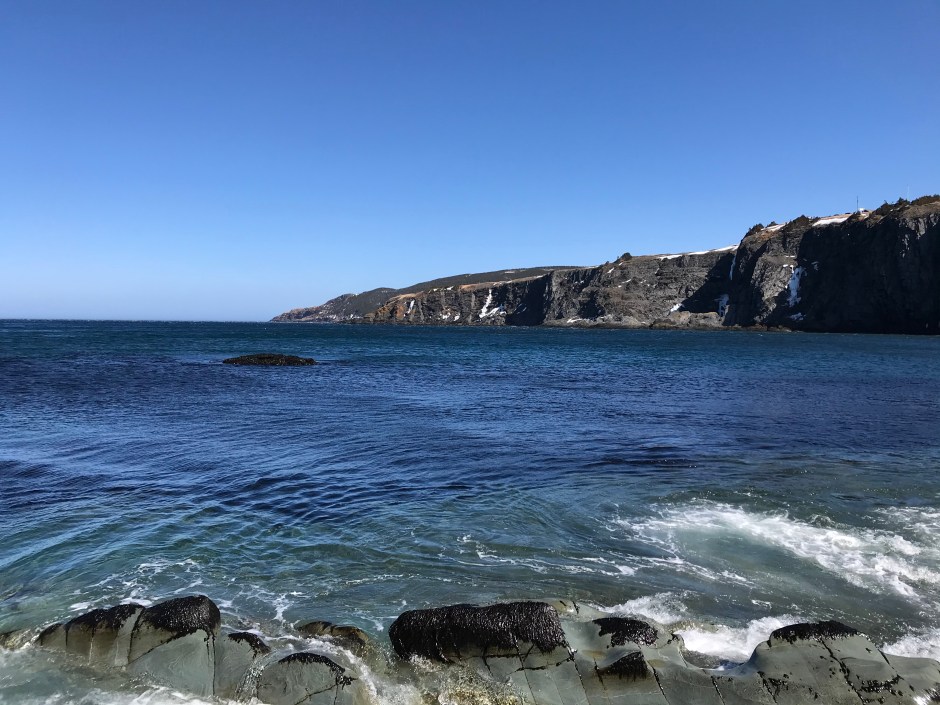
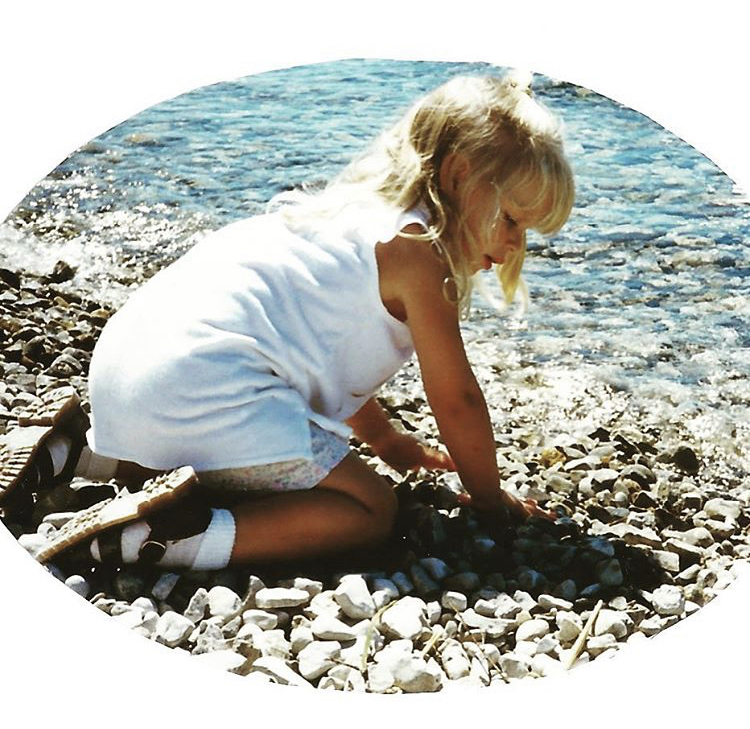
This past Saturday I went on a trek to Middle Cove Beach, the early spring sun too enticing to ignore and to sacrifice its charms to my work. While dipping my fingers into the boreal seawater and collecting pebbles, Canadian author Margaret Atwood’s unusual rhetorical question, “Where is here” (7), wandered through my mind. I paused to let this question seep into my skin with the seafoam and sunlight. As I reflected on her words, I found that Atwood’s question can yield more than spatially-oriented answers. Here can indeed be a place but it can also be a moment on a timeline. Here can be a feeling: the sea, the gull song, the smooth stones in my pocket. This is here, now, me.

IMG_9696

I interpret that Atwood believes “here” to be the unique mindset of the Canadian writer. Atwood poses this question in her essay “What, Why and Where is Here?”, in which she situates specifically Canadian works in the wider canon of Western literature. Atwood seeks the spirit of Canada itself in the texts of her predecessors and contemporaries; indeed, Atwood writes, “I’ve treated the books as though they were written by Canada” (2, emphasis my own). Atwood seems to suggest that the aura of Canada — distinct from its monolithic North American neighbor or its former imperial ruler — derives from its heterogeneous culture and the character of the land itself, which consequently influences the literary imaginations of the writers it creates.

In retrospect, considering Canada as the author of its own narratives, in the manner of Atwood, before attempting to engage with the works on my Public Intellectuals course may have facilitated a reading strategy that engaged with the course texts on a deeper, more meaningful level. In a significant way, I failed as a student. Given my proximity to Canada as an American citizen, I sublimated the Canadian authors’ responses to their national and cultural context to my American frame of reference, a tendency Atwood directly challenges in “What, Why and Where is Here?” I believe that my reading of the course materials signifies precisely what Atwood warns against: conflating North American perspectives and failing to register subtle differences in a way that sacrifices the effective interrogation of the Canadian writer’s particular rhetorical style, further muddying the essence of the Canadian perspective underpinning the narrative. I realize now that my lack of engagement with such close reading stems from discomfort, an unwillingness to tease out even the finest knot of ambiguous meaning or nuanced perspective. Despite my physical travels — my multiplicity of physical “heres” — the Public Intellectuals course exposes the empty spaces within my “geography of the mind” (Atwood 8-9), a geography that could benefit from further development from the literary influence of the Canadian experience of Canadian land, as Atwood suggests. 

Within these uncharted expanses of my intellectual development stands uncertainty, hic sunt dracones as the antiquated mapmaking adage goes. Microcosmically, I still question where the dividing lines of public intellectual, public celebrity, and academic fall within the confines of this Public Intellectuals course. Two minds assessed on this course, David Suzuki and Thomas King, for example, both produce work of a sophisticated caliber from within the space of the academy as a scientist and professor of English literature, respectively. However, as both engage in public lectures and debates, write short essays and articles, and produce works in a variety of mediums (i.e. short films published to YouTube), Suzuki and King demonstrate their prominence as public-facing intellectuals, as they “rely on their use of media to articulate a higher mode of thinking” (Deshaye 2020) while appealing to a broader scope of people, many of whom may not be academic. Suzuki and King’s use of various forms of media — from comedic radio broadcasts (King) and educational television programs for children (Suzuki) — further signifies their mutable identities, as such presences seem to connote the image of the celebrity, a word one tends to associate with “popular” figures like actors and musicians. The spaces between the categories of (public) intellectual, academic, and celebrity thus seem liminal. These ambiguous spaces allow the initiatives of these identities to collide and hybridize.

Yet is this uncertain, hybrid, fluid definition of what it means to be a public intellectual the ultimate learning outcome this course on Public Intellectuals intends for the student to achieve? Again, I return to Atwood’s question: “Where is here” in the context of my learning, publicly displayed on this blog, and in my relationship to the distinctly Canadian paradigm, the course emphasizes? Yet perhaps a better question, while retaining Atwood’s language, is: what is here?

4D28F46A-8B2F-4692-8DA9-DDFC516D1A81

*

Like the sea I so often turn to in times of uncertainty or stress, I find that my conception of my own understanding of particular intellectual concepts eddies in the various pools of my mind. Perhaps this is the geography of my mind (Atwood 8-9): protean and changeable under the various tides that influence it. Perhaps the significance of this course exists on a more self-reflexive level, intending for the students to utilize their own liminal status as burgeoning academics to challenge stringent definitions of intellectual activities. Essentially, perhaps we as students serve as the most effective of public intellectuals, particularly when we engage in activities such as blogging academically-oriented topics.

In her essay “Situating the public social actions of blog posts”, Kathryn Grafton suggests that “an exigence of frequent self-expression drives the blogger to write about something, but not about anything: the ensuing post must be a fitting response to her ongoing performance of self” (91, emphasis retained). The academic/intellectual blog thus exemplifies the “ongoing performance of self” Grafton identifies for the student, becoming a means to grapple with one’s own ideas in real-time as well as invite their public — whether social, professional, or intellectual — into a dialogue about this performance of self as the developing intellect. This tenuous position as “thinkers in progress” signifies that a connection to a wider, less specialized public is still maintained. Perhaps this opens a critical channel of communication, in which students such as myself may link the seemingly esoteric, complex ideas produced within the academy with those outside it, articulating thoughts about such knowledge in an accessible way.

As an intellectually inclined blogger, a hopeful student, and a sometime writer, I continue to cultivate the various aspects of my style and interest as a response to the courses I participate in. Though my understanding of public intellectualism stems from personal doubt, I intend to remain cognizant of the unique position I occupy in virtue of my studies and appeal to broader publics on the digital platform of the blog and the “traditional” space of the written text.

Thus I turn to what is here, the space of my mind: uncertainty about my next steps after academia. A willingness to continue cultivating my ideas, intellectual or otherwise. An interest in engaging with Canadian narratives. How to forge connections between my academic background and a professional career. The sea, the sky, the land: their influence, their lessons.

“Here” is a multitudinous thing.

Finis

Works Cited

Atwood, Margaret. “What, Why, and Where is Here?” Survival by Margaret Atwood, M&S, 1996.

Deshaye, Joel. ENGL7300: Public Intellectuals in Canada. 14 Jan. 2020, Memorial University of Newfoundland, St. John’s. Lecture: “Theories of Publics and Classes.

Grafton, Kathryn. “Situating the public social actions of blog posts.” Genres in the Internet: Issues in the theory of genre, edited by Janet Giltrow and Dieter Stein, John Benjamins Publishing Company, 85-111.

Masefield, John. “Sea Fever (1902).” Poetry Foundation, Poetry Foundation. poetryfoundation.org/poems/54932/sea-fever-56d235e0d871e. Accessed 23 Mar. 2020.

Suzuki, David. “Idle some more: a novel climate solution.” David Suzuki Foundation,
David Suzuki Foundation, 18 Mar. 2020, davidsuzuki.org/story/idle-some-more-a-novel-climate-solution/. Accessed 21 Mar. 2020.
“Come away, O human child!” || On the Value of an Education in the Humanities for the Changeling Child – a Response to Tasha Kheiriddin

One year after I graduated from the University of St Andrews, I was unemployed. Meanwhile, my peers proudly displayed keys to their new flats, sported freshly-pressed business suits to begin their careers at noteworthy companies, flashed engagement rings in magazine-worthy photoshoots, and hung Master’s degrees upon their walls. I did not apply to any Master’s program for the following autumn, my final months at university so haunted by anxiety that I had little intellectual energy to spare. So, I began to apply for various jobs, even ones as small as part-time bookseller positions at Barnes and Noble. Soon, though, I accrued enough letters of rejection that I could stitch them together like the panes of a patchwork quilt. During this time, I did not even possess a bank account.

In throwing all of my effort behind a degree I believed would put me so far ahead in the world, I failed to see just how far behind I truly was.

fullsizerender
The naïve graduate

While the so-called “entry-level” workforce remains highly inaccessible, reflecting on my first encounter with unemployment forces me to realize that most of the obstacles I encountered were of my own making. Yet I never consider my choice of an undergraduate degree to be the underlying cause of these struggles. Despite my time in the freelance and entry-level workforce, I remain an outspoken advocate for the value of an education in the humanities. This perspective consequently chafes against the arguments levied by conservative Canadian media personality Tasha Kheiriddin in “Engaging the Next Generation: Issues, Ideals, and Academia”, a chapter from her 2005 book Rescuing Canada’s Right: Blueprint for a Conservative Revolution co-written with Canadian journalist Adam Daifallah.

According to Kheiriddin and Daifallah, “Student groups complain incessantly about the cost of higher education and the agony of paying back loans. They should realize that it’s much easier to pay back a loan when your degree actually qualifies you for a job” (“Engaging the Next Generation” 129). Specifically, Kheiriddin and Daifallah seem to condemn university degrees in the humanities that offer courses on diverse subjects such as gender — a significantly more fluid concept in 2020 than in 2005, when their book was published — monsters, and witchcraft. However, Kheiriddin and Daifallah’s rather condescending argument falls short on two accounts. First, though the pair were writing fifteen years ago, what they fail to consider is the potential for technology to become increasingly pervasive in the minds of youths. From a now-contemporary standpoint, technology radically changes the character of the classroom as children are given tablets from primary school through to their graduation. For example, in many of the high schools I worked for as a substitute teacher in 2017 and 2018, most reviews for tests and examinations take the form of a game played between the teacher and the students using their tablets and other interactive software. This example evidences the alterations educators have made to the traditional structure of the classroom to accommodate the increasing integration of technology, particularly smartphones, with the minds of both America and Canada’s youth (Twenge 2017).

The young people entering into institutions of higher education are thus dependent on intense stimulation, as scintillating screens influence many of their lives (“Engaging the Next Generation” 120), including those moments spent in the classroom. However, what Kheiriddin and Daifallah consider of “dubious academic value” (“Engaging the Next Generation” 128) may offer an inviting and engaging path for the students of today to traverse on their way to developing their intellect. Such unorthodox topics possess the potential to capture the imagination and subsequently stimulate increased attention for the content. While more traditional scholars could argue that using critical notions of monstrosity, to maintain Kheiriddin and Daifallah’s example, in such a way may cheapen academic study, the value in this instance is an offer to bridge the gap between scholarship and the highly stimulating worlds of today’s youth. Once academics establish this link, perhaps students will grow more receptive to the development of the skills intrinsic to success in these humanities courses, skills such as identifying the critical concerns of a text and crafting articulate responses to various ideas through discussion and written arguments. “[D]ubious academic value” (“Engaging the Next Generation” 128), indeed.

13041057_10206874085118101_394174660827126002_o
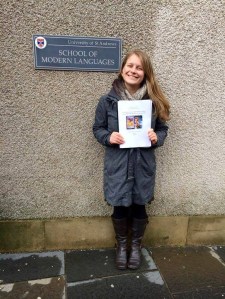
Proudly showing off my undergraduate thesis on “The Princess Bride,” which received a first-class mark.

When Kheiriddin and Daifallah charge students to reconsider how their “degree actually qualifies [them] for a job” (“Engaging the Next Generation” 129), they fail to register the ways in which the curriculum structure of a humanities degree cultivates professional development, particularly in graduate study, which signifies the second weakness of their argument. I will acknowledge that privileging any degree ahead of work in the trades does nothing to alleviate this debate. Rather, ignoring or even demeaning those whose skills are not compatible with the traditional classroom model of education only further entrenches this discussion in problematic ideas. Yet for the purposes of this discussion, I will focus on the debate between “employable” and “non-employable” degrees that underscore such vehement critiques of humanities scholarship.

While working as a substitute teacher, and indeed at other moments in my professional journey, I noticed an unsettling trend. In a full classroom, students would prefer to text their friend a desk or two away from them rather than speak to one another. When I worked with any student, he or she rarely met my eye (not including those students with diagnoses that may alter such interpersonal skills). More disturbingly, if I were to speak directly to a student, I was often met with an uncomfortable silence, an outright refusal to engage in conversation with me. What I began to realize was the absence of interpersonal and verbal communication skills as curriculums and external bodies privilege STEM-based learning ahead of the humanities. Once, while attempting to get a class of advanced placement English literature students engaged in a discussion on William Shakespeare’s Macbeth, a student I was fortunate to possess a rapport with raised his hand and said, “Miss Sadler, no offense, but none of us really care.” These were to be the students entering university the following autumn.

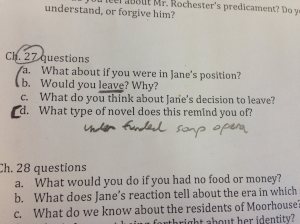
27913084_10211951431488587_5671090017861367196_o
One AP English student’s take on “Jane Eyre.” A humorous observation, yet one not even articulated in a full sentence and lacking any attempt at critical engagement.

In her article “Why ‘worthless’ humanities degrees may set you up for life”, journalist Amanda Ruggeri consults former Forbes technology reporter George Anders about the common misconceptions surrounding humanities degrees in the workplace, specifically in the professional world of “Big Tech.” Ruggeri writes:

Anders says that Silicon Valley ‘was consumed with this idea that there was no education but Stem [sic] education’ […] But when he talked to hiring managers at the biggest tech companies, he found a different reality. ‘Uber was picking up psychology majors to deal with unhappy riders and drivers. Opentable was hiring English majors to bring data to restauranteurs to get them excited about what data could do for their restaurants,’ he says (2019).

As Anders observes, the value of an education in the humanities rests not simply in the content of one’s study. Rather, it is necessary to consider the skills, skills that are applicable to any professional sphere, one cultivates while earning such a degree. In my academic and professional experience, such capabilities include but are not limited to:

  • Analyzing the meaning of any body of text and identifying its key arguments
  • Articulating one’s perspective in a discussion and negotiating conflicting ideologies
  • Collaborating with one’s colleagues (fellow students and professors alike) to peer review work or further develop one’s research
  • Conducting independent research using a diverse range of sources
  • Crafting clear, concise pieces of written work to exhibit mastery of any language one writes in
  • Networking with academic professionals in the classroom, at extra-curricular events, via email, and at academic conferences

I contend that the effectiveness of any professional organization significantly diminishes if its members cannot demonstrate a command of such interpersonal and communicative skills. As a direct challenge to Kheiriddin and Daifallah, what about these curricular foundations in the humanities does not “actually qualif[y]” (“Engaging the Next Generation” 129) someone for gainful employment?

However, I believe that it is crucial to consider the value of an education in the humanities beyond its financial risks or rewards. As previously discussed, allegedly “non-useful” courses in seemingly “ridiculous” subjects, including fairy tales and monsters (some areas of my personal research interest) may prove a useful tool for stimulating renewed interest in academic scholarship, particularly in the fields of literature. Perhaps this is what struck me so deeply about Kheiriddin’s perspective, considering that her daughter, Aria, “considers herself a changeling” (“How Autism can Make a Better World” 2:40).

028c229dddb176514256999f63ca90ae
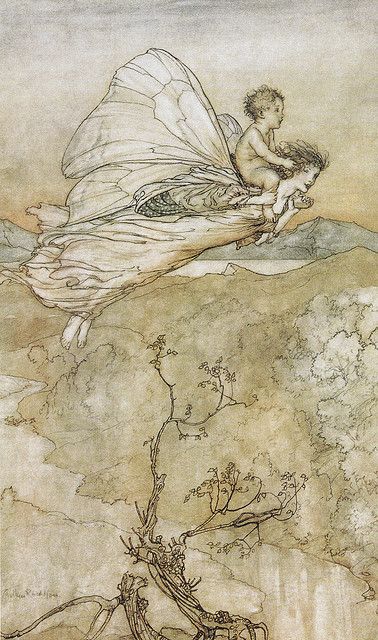
“Fairy Stealing a Child” by Arthur Rackham (1908)

In her 2017 TEDx talk “How Autism can Make a Better World: 5 Things I Learned from a Fairy,” Kheiriddin uses her testimony as a mother of a child with Autism Spectrum Disorder to discuss certain issues in Canada’s education system. Kheiriddin encourages listeners to not “shut out the unusual because you would be missing out on an opportunity” (“How Autism can Make a Better World” 10:12), as if in a plea to prospective employers of individuals who register on the autistic spectrum.

Kheiriddin seems to value the unorthodox as it manifests in her daughter, and treasures her daughter’s intense imagination. Would not her daughter in the very least be interested in, if not benefit from, an educational institution that does not drill employability and marketability into its students but instead cultivates their specialized interests, including interests in fairies? Kheiriddin’s intense critique of academia and scholarship in the humanities came in 2005, and her daughter was born four years later. One can only hope that she has since altered her critical perspective in light of the new world view her daughter has exposed her to; a sixth lesson, perhaps, learned from a fairy. 

Though I do not register on the autistic spectrum, I myself was something of a changeling child. I felt as though the world’s most fantastic things danced at the edge of my vision, tempting me, so I trained my gaze far into the distance to witness them. I played by myself, I read stories of adventure and daring, and I created my own world out of the sticks and pebbles of my collections. I would not be the scholar I am today without the support of parents who saw that my unusual imagination would thrive only in the humanities, that this path would entail a fruitful life for their wee changeling. I am also fortunate to have encountered academic professionals who believe in my projects, as steeped in fairy magic as they are. Perhaps what the world needs, particularly in times such as now, is a little more magic and mystery.

Works Cited

“How Autism can Make a Better World: 5 Things I Learned from a Fairy” by Tasha for TEDxKelowna.” YouTube, uploaded by TEDx Talks, 6 Jul. 2017, youtube.com/watch?v=HALkEa7sgTU. Accessed 14 Mar. 2020.

Kheiriddin, Tasha and Adam Daifallah. “Engaging the Next Generation: Issues, Ideals, and Academia.” Rescuing Canada’s Right: Blueprint for a Conservative Revolution by Tasha Kheiriddin and Adam Daifallah, John Wiley & Sons Canada, Ltd., 2005, 119-139.

Rackham, Arthur. “Fairy Stealing a Child.” 1908. pinterest.com/pin/138907969727761464/. Accessed 17 Mar. 2020.

Ruggeri, Amanda. “Why ‘worthless’ humanities degrees may set you up for life.” Worklife BBC, The BBC, 1 Apr. 2019, bbc.com/worklife/article/20190401-why-worthless-humanities-degrees-may-set-you-up-for-life. Accessed 16 Mar. 2020.

Twenge, Jean M. “Have Smartphones Destroyed a Generation?” The Atlantic, The Atlantic Monthly Group, Sept. 2017, theatlantic.com/magazine/archive/2017/09/has-the-smartphone-destroyed-a-generation/534198/. Accessed 15 Mar. 2020.

Yeats, W.B. “The Stolen Child.” Poets.org. American Academy of Poets, poets.org/poem/stolen-child. Accessed 16 Mar. 2020.

“[…] my heroes were warrior-intellectuals” ||The Treasonous (Public) Intellectual in a Multi-Cultural World

11699006_10205055218487572_5554614006625875163_o
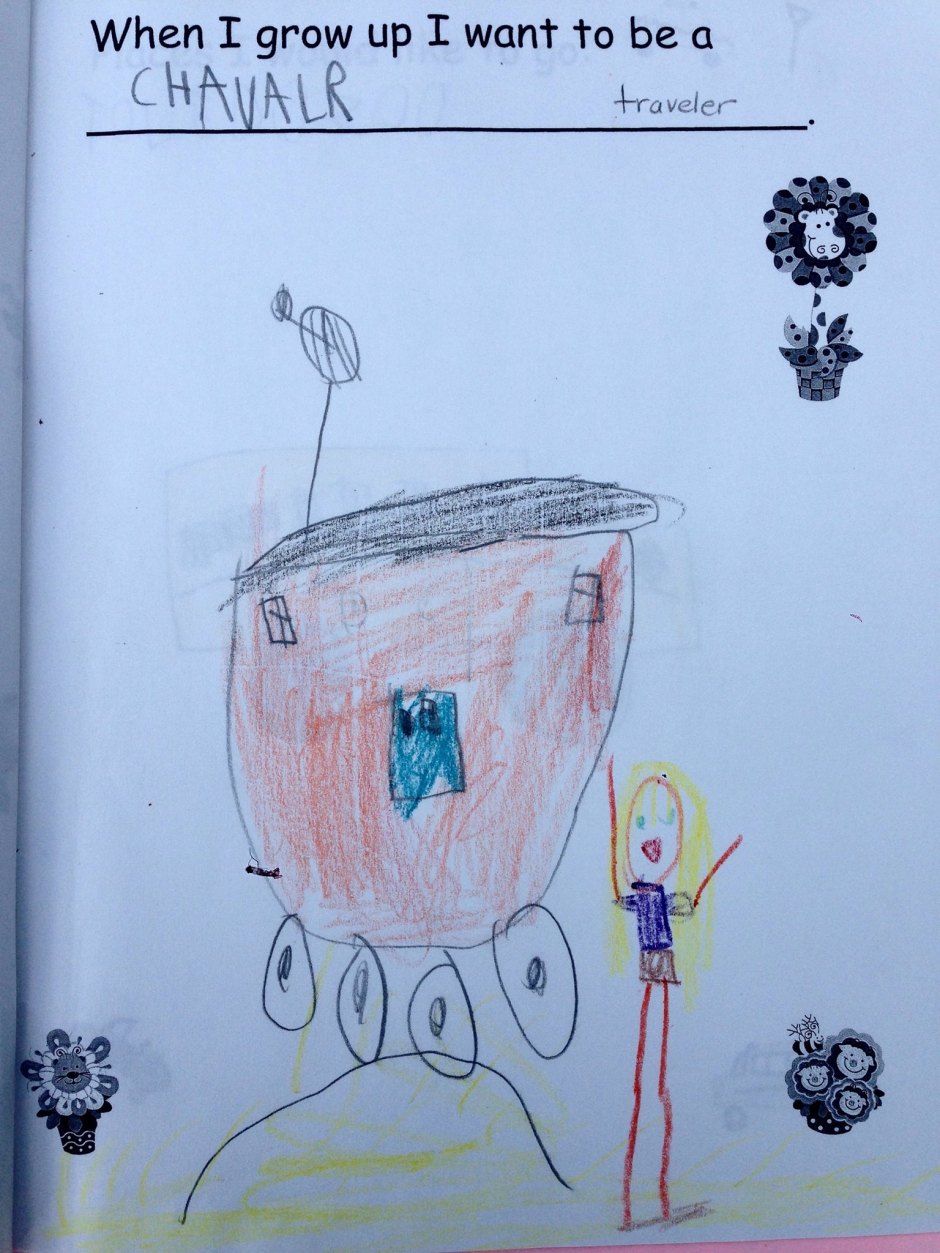
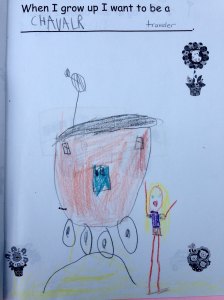
My childhood aspiration.

For a child, rainy days do not usually bring the most exciting of adventures. They are spent indoors, cooped up, and without fresh air and freedom. A grim forecast during a vacation? Even worse. However, as my brother and I spent sepia-toned summers at our grandmother’s cabin in northern Michigan, a part of me would yearn for just one rainy day sprinkled into the mix of fishing, collecting shells along the beach, and indulging in an Oreo cookie with Grandma Sue. When the rain would speckle the thin, luminous window glass, my mother and my grandmother knew just the thing to keep two rambunctious forest urchins occupied for a few hours of the day: and his name is Indiana Jones.

Oddly enough, Indiana Jones occupies a treasured yet unusual memory from my childhood trips to Grandma Sue’s cabin. I found this “warrior-intellectual” (Trudeau 19), to borrow Canadian poet George Elliott Clarke’s words, captivating, a scholar with the charisma and devil-may-care charm of a Wild West gunslinger. Until my early twenties, the fantasy of Indiana Jones signified what I hoped to accomplish in my life: the marriage of academia and adventure, to follow Indy’s footsteps and become a “warrior-intellectual” (Trudeau 19).

Publicizing my thoughts and intellectual work on this blog as a part of my Master’s degree has certainly engendered an awareness of my privilege as an educated young woman. However, the focus of this course, public intellectuals, forces a reckoning with the responsibility I possess as an educated individual in articulating both the unorthodox experiences I have had and how they relate to the kinds of work the academy produces today. Specifically, I reflect on the disparity between my time as an undergraduate student at one of the world’s most prestigious, multi-cultural, and indeed affluent universities and my brief foray into volunteering with the United States Peace Corps.

In a rather oblique way, Canadian poet and literary critic George Elliott Clarke’s play, Trudeau: Long March & Shining Path and his self-proclaimed “decision to write up [Pierre Elliott] Trudeau — to actually put my words in his mouth” (Trudeau 20, emphasis my own) inspires my reflection on my past ambitions. In a previous life, I dreamed of gallivanting across the world, collecting and preserving the antiquities of other cultures a la Indiana Jones as a dashing, adventuresome scholar. In my naivety, I would wax on about my desire to abandon the “prison” of the classroom (Marshall McLuhan qtd. by Deshaye 2020) to obtain a more “grassroots” experience of the orally-based, more “traditional” cultures around the world I intended to study.

dsc_0003

To cite my application to the Peace Corps: “[…] what essays and textbooks cannot provide is a real-world understanding of how theories of the methods and effects of cross-cultural exchange on cultural products apply beyond the classroom and to affect those cultures discussed in a Comparative Literature program. I also find myself wondering who it is taking the initiative to promote change in the areas my peers and I identified as problematic, such as women’s accessibility to education on the global stage. I then realized how this motivation to experience personal interaction with diverse cultures and my educational background could be used to benefit such people. Volunteering with the Peace Corps would provide such an opportunity to apply what I learned at university while aiding those who could benefit from my skills.” The desire underpinning my motivations to embark upon two years of voluntary service in the Peace Corps was, whether I was cognizant of it or not, was to put my words in the mouths of the marginalized people I encountered to enrich my own storytelling. While Clarke articulates the same idea, the thoughts running through my adventure-craving mind were, unbeknownst to me at the time, a bit more sinister in their critical implications.

Much like the heroic Indiana Jones declares, “That belongs in a museum” (Indiana Jones and the Last Crusade 1989), in the guise of the “warrior-intellectual” (Trudeau 19), I too aspired to “preserve” the traditions of the world’s most remote lands and isolated communities. I looked to embalm their words in the jeweled sarcophagus of my own romanticized narrative voice, to archive their stories in the leather-bound notebooks of my private collection.

What I failed to realize was how little those people needed me to be their storyteller, to be their intellectual hero.

In The Gambia, an individual known as a griot serves as the community’s historian, storyteller, and musician. The griot is the keeper of cultural tradition. While I never had the privilege of meeting a griot directly, during my Ngente ― or naming ceremony, which formally welcomed me as a member of my host family ― I do recall an individual who sang during the ceremony and performed an oral narrative. It was then I realized: these people do not need my words in their mouths. The Gambian people had their storytellers; I was just another toubab struggling in the heat of the summer sun. I could never tell their stories with my imperfect grasp of Wolof, with my ability to return to the comfort of an American home after my two-year service concluded.

When describing the various “treasons” an intellectual of color may commit today, Clarke concludes that silence, particularly his own, in the face of “supercilious claims” made by a white woman against a black student is “the rankest treason” (“Treason of the Black Intellectuals?” 1998). My experience as a white, highly educated, reasonably middle-class American woman is in no way equitable to Clarke’s. However, as a burgeoning intellectual, I find my treason to be of the opposite, and perhaps more insidious, nature: I was not silent, daring instead to add my own voice to the milieu of ignorance that contends with an increasingly multi-cultural world. Today, I am careful when choosing my words to express my experiences abroad. I steep my reflections in gratitude and respect, not out of fear of offending given my exceedingly privileged position, but out of genuine appreciation for the diverse people I have encountered who offered me a warm welcome despite our differences, despite whatever intentions lurked beneath the surface of my outward quest for knowledge.

In Trudeau: Long March & Shining Path, Clarke uses his perspective as a Black intellectual in Canada to interrogate former Canadian Prime Minister Pierre Elliott Trudeau, a man whom Clarke identifies as having “loved donning the garb of other cultures: a turban here, a rob there. No Canadian prime minister before or since has associated as closely with the Third World ― or with Canadians ‘of colour'” (21). Yet is his fascination with Trudeau a kind of “treason” itself? Specifically, are Clarke’s dichotomous representations of Trudeau problematic in relation to his role as a public intellectual? Should we even conflate a public intellectual’s person with the work that they produce? Ultimately, these questions frustrate a clear reading of Clarke’s text, particularly in light of my own brief history with cross-cultural encounters and the difficulty that inevitably emerges when attempting to appropriately articulate those experiences as a privileged, educated individual. However, Clarke’s intellectual project in Trudeau: Long March & Shining Path inspires a reconsideration of one’s “heroes”, the “warrior-intellectuals” (19) as Clarke clearly grapples with in his ambiguous representation of Trudeau. Does the public need or desire such figures as the “warrior-intellectual” or an Indiana Jones-like scholar-adventurer? While they may be entertaining on a rainy afternoon, perhaps they are best left in the “theatre of imagination” (Trudeau 15).

Works Cited

Clarke, George Elliott. “Treason of the Black Intellectuals?” Canadian Writers: Faculty of Humanities and Social Sciences, Athabasca University, 4 November 1998, canadian-writers.athabascau.ca/english/writers/geclarke/treason.php.

Clarke, George Elliott. Trudeau: Long March & Shining Path. Gaspereau Press Limited, 2007.

Deshaye, Joel. “Marshall McLuhan Review.” English 7300: Public Intellectuals in Canada. 11 February 2020, Memorial University of Newfoundland, St. John’s. Lecture.

“Indiana Jones and the Last Crusade.” Wikiquote, 7 January 2020. en.wikiquote.org/wiki/Indiana_Jones_and_the_Last_Crusade.

‘Mishigamaa’ and the Question of Native

There is a story I know. It is about an island and how it flourishes on the back of a turtle. I’ve heard this story many times, and each time someone tells the story, it changes. Sometimes the change is simply the voice of the storyteller. Sometimes the change is in the details. Other times it’s the way the story is presented, either in language, print, or art. But in all the tellings of all the tellers, the turtle always becomes the island. || Paraphrase of Thomas King, my own details added.

*

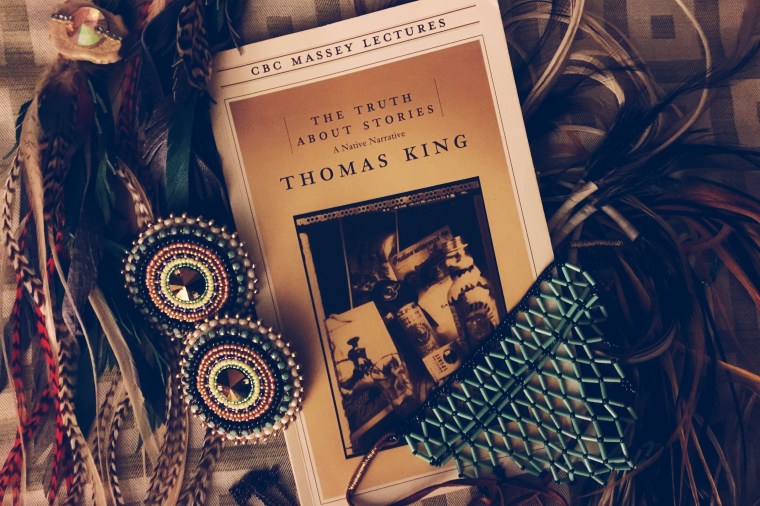
I am not sure what I was expecting when I opened to the first page of Thomas King’s The Truth About Stories: A Native Narrative. Despite King’s prominent place in the canon of contemporary Canadian literature — and being an American expatriate — I had never encountered his work, nor even heard his name. I settled in with this narrative with the attitude to churn out yet another text for my “Public Intellectuals in Canada” class. My mind remains open to engagement but I find that it is often closed to being truly affected by the words waiting for me in those pages.

One of the difficulties with my place in this “Public Intellectuals in Canada” course is the fact that I am not Canadian. At times, I often feel as though the local and national knowledge is taken for granted. A colleague or the professor will mention certain public figures, events, and cultural products — whether it be novels, films, television shows, or even something as simple as advertisements — and everyone will immediately be in the know, allowing the conversation to charge ever-onward. I find myself left behind. The trouble is, I am different from my peers in two very crucial respects: I was born in the United States but received my undergraduate education in the United Kingdom. I straddle two distinct spheres while attempting to orient myself in this third space, as though I, alone, am playing a game of intellectual Twister. I am always balanced precariously amongst these places: I never allow myself to come crashing down definitively on one circle, letting it swallow me up.

As Thomas King opens his narrative, “There is a story I know,” something remarkable happened. I found that I too know this story. I know it almost as intimately as I know my own. King is an American in Canada and a storyteller; I, armed with stories of my experiences told one too many times, wander the streets of St. John’s, Newfoundland, a most unlikely place for a girl from rural Michigan.

Yet King’s story is different. King tells about a woman he calls Charm who falls through the sky to the earth, enlisting the aquatic creatures she met there to create land for her to live on upon the back of a great, giant turtle (12-21). King calls his story “the Woman Who Fell from the Sky” and it is a “Native” narrative of Creation (22). King himself is a prominent scholar of Cherokee heritage and a Professor of English at the University of Guelph. Once again, the story has evolved into one I do not know. Once again, I find myself on the outside.

The study of indigenous literature and perspectives is a topic that I consistently grapple with. My interest in indigenous storytelling began as a young, pebble-collecting urchin trundling along the shores of Lake Michigan. The creation story King tells is a variant of a story told frequently at home about a popular tourist destination: Mackinac Island. Today, this story appears in a strikingly illustrated children’s book by Minnesotan (and non-native) author Kathy-jo Wargin. It tells of the great turtle Makinauk who transformed into Mackinac Island after the most stalwart and least-esteemed creature, a tiny muskrat, managed to capture soil from the bottom of Lake Huron to place upon the turtle’s back.

Almost every child-friendly household in Michigan owns Wargin’s picture book, alongside her companion work The Legend of the Sleeping Bear Dunes. Many knew these legends before they were fixed in print and in artwork. In Michigan, legends flit along the shores of the Great Lakes, hiding buried in the sand with Petoskey Stones. They lurk in the deep pine forest with the black bears, wary of the humans that pass them by. Legends feed the Michigan imagination; they nourish its sense of self.

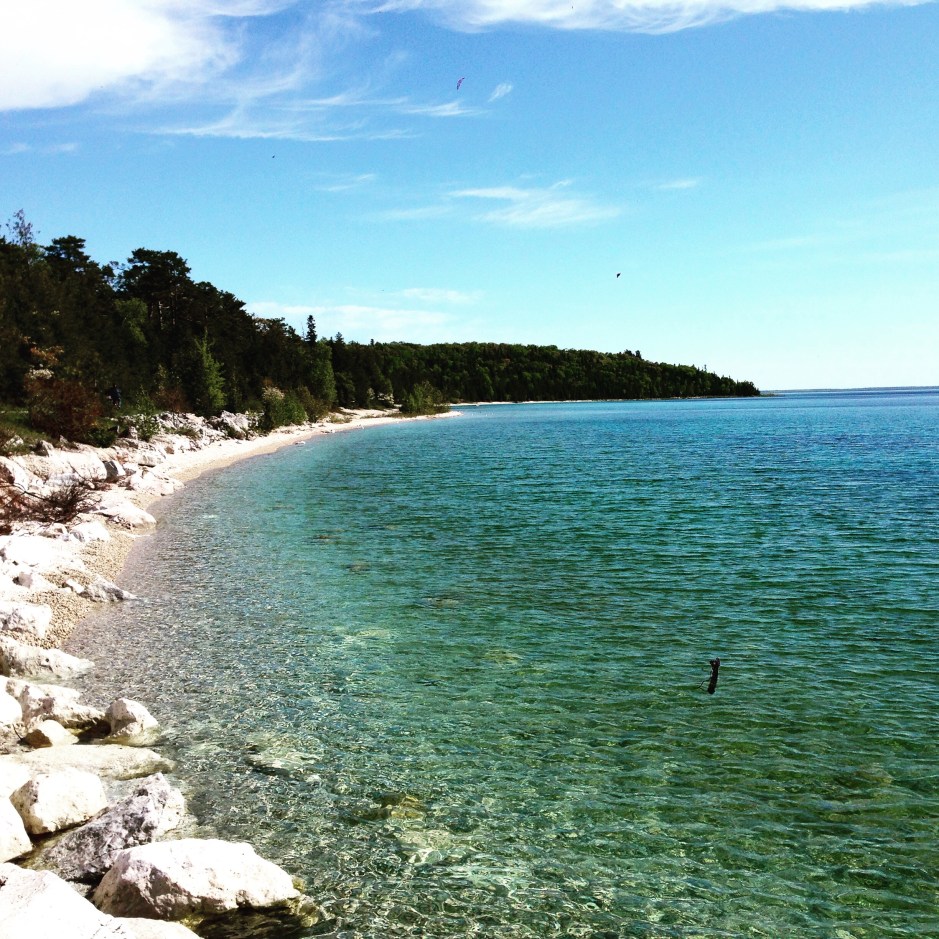
However, critic Deborah McGregor argues in her essay “Coming Full Circle: Indigenous Knowledge, Environment, and Our Future” that “Our knowledge cannot be placed in a book or library; it does not work that way” (399). How, then, can we who were born and bred in a place like Michigan — as steeped as it is in lake water and indigenous narratives — who are not indigenous reconcile our love, respect, and interest in our home and its stories? I have never known what it means to not respect the indigenous narratives and legends that shape my home. As a child, I spent a large portion of my time away from the urbanized southeast of the state at my grandmother’s cabin in the far north. This childhood was spent toddling along quiet rivers, hunting for Petoskey Stones, listening for the call of the loon caught on the morning breeze, and taking in the stories that created that land. My mother was careful to educate my brother and I about the people that called the lakes and forests home before us, to expose us to their art, music, and stories so we could know lives different from our own, though we were both “Michigan natives.”

Processed with VSCO with 7 preset

In light of King’s The Truth About Stories — his testimony of native experience and scholarship — and McGregor’s essay, I struggle to reconcile the deep respect, and indeed pride, I feel for my home and its privileging of its indigenous past. I question my interest in the stories that nurtured my love of storytelling, folklore, and magic: of bears transforming into sand dunes, of brave muskrats, and turtles who carry the weight of human lives upon their backs. Though I have possessed a long-standing desire to study indigenous literature in an academic setting, perhaps even pursuing an extended research essay on the topic, instead, I ask: are there things that cannot be studied or taught by people who do not share the background of those who tell those stories? What role do I play — traveler, Michigan “native”, and burgeoning scholar — in the preservation of these stories, or would the best thing I could do to be to leave them be?

This post feels disjointed. Disconnected. Adrift. Perhaps it mirrors my own state of mind in reflecting upon the topic of nativeness, indigenous literature, storytelling, and the role scholars play in the respectful study of narratives that are integral to the people that tell them. Perhaps it feels lost in light of the notion that “Indigenous Knowledge cannot be separated from the people” (MacGregor 399), forever barring my curiosity from cultivating a deeper understanding of the narratives that nurture my home. What can I truly know?

Works Cited

Campbell, Tenille K. “The Truth About Stories – King.” Photograph. Tenille K Campbell: Academic, Photographer, Poet, 28 November 2016. tenillecampbell.com/?p=755. Accessed 3 March 2020.

King, Thomas. The Truth About Stories: A Native Narrative. Dead Dog Café Productions Inc. and the Canadian Broadcasting Corporation, 2003.

McGregor, Deborah. “Coming Full Circle: Indigenous Knowledge, Environment, and Our Future.” American Indian Quarterly vol. 28, no.3/4, Special Issue: The Recovery of Indigenous Knowledge, 2004, 385-410. JSTOR, jstor.org/stable/4138924.

van Frankenhuyzen, Gijsbert. “The Legend of Mackinac Island.” Cover art. Sleeping Bear Press. sleepingbearpress.com/shop/show/11482. Accessed 3 March 2020.